Waste bamboo can be carved. – Zhou Guixin
A piece of bamboo has 10,000 wonderful possibilities in the hands of an artist.
Is it possible for a piece of discarded bamboo to be given new value, even beyond the essence of bamboo?
A post-70s folk craftsman in Dongyang, with a literacy and creativity, has subverted the world’s traditional impression of bamboo carving with works of waste bamboo
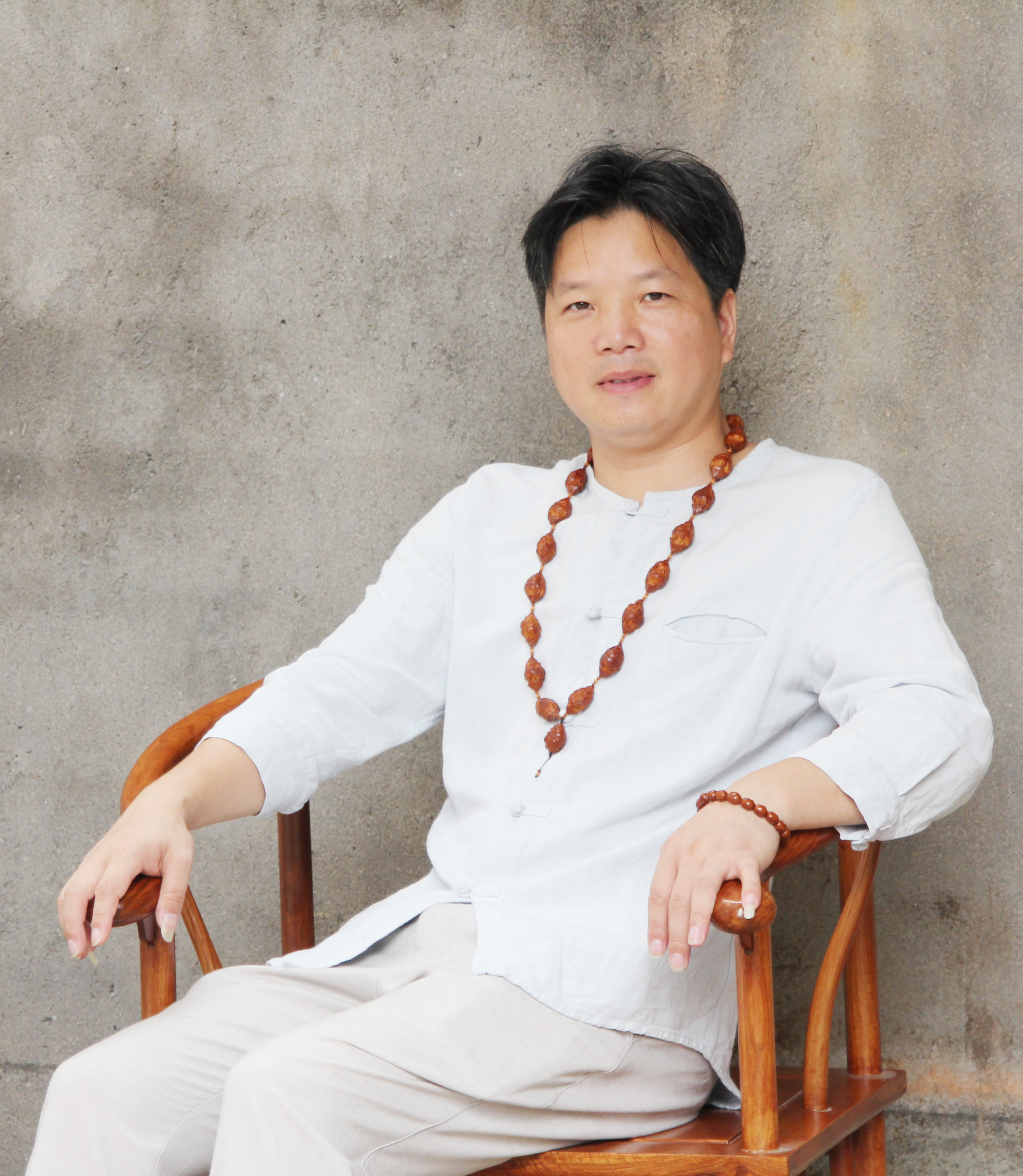 △ Zhou Guixin
In a soft way to the strong.
Bamboo carving. From the subdivision of carving materials, it can be divided into three categories: bamboo carving, bamboo root carving and turning spring carving. Zhou Guixin mainly creates bamboo root carvings, the main objects of which are bamboo roots buried deep in the ground.
The root is the hardest part of bamboo, it can break through many obstacles underground, including soil, stone and the root system of other plants. This underground living environment also creates a variety of images of bamboo roots, and the strange-shaped bamboo roots give artists to create Therefore, after more than 20 years in the art, Zhou Guixin has abandoned its branches and took its roots in the selection of bamboo materials. Ordinary bamboo poles can also be used as bamboo weaving materials, and those sloping bamboo branches and light and fragile bamboo leaves have almost only one result: waste.
However, after integrating the carving techniques of Dongyang woodcarving into bamboo root carving and creating a new realm, Zhou Guixin found that he had entered the “bottleneck” of creation, and he began to examine these “waste materials”. He turned his attention to the bamboo branches and found that the branches growing from the bamboo joints have a unique line tension.
Because of the need for composition, Zhou Guixin often reads classic atlases. “Line is the essence of Chinese painting art, and it is also a unique system independent of Western sculpture block art, and its most distinctive appearance on bamboo is bamboo branches.” It seems that the bamboo branches are the expression of the lines, and the dagger-like bamboo leaves are like the brushes that the painter swayed at will.


Driven by these impressions of the superimposition of classical and modern art, Zhou Guixin began to study these bamboo branches. After bleaching, peeling, and de-knotting the bamboo branches, he followed the method of the folk stencils, using slow fire and wrapping them with fingers to make the straight lines of the bamboo branches become curved and soft, transforming them into the shape of the trees on the towering tree. branch. And the bamboo leaves were also cut by skillful hands and turned into bean-sized leaves and rice-sized flowers. Moment of youth, then become eternal.
There is no background to set off, and there are very few carvings. The trees “grown” from the dry bamboo branches and leaves have the beauty of wabi-sabi and infinite Zen. “It is different from the pure freehand brushwork or realism of traditional bamboo carvings. It is like the small freehand brushwork of Chinese painting, which more reflects the ethereal realm.” Zhou Guixin said with emotion, the creation of this group of bamboo carvings made him understand the relationship between reality and reality in Chinese painting. It is clearer that the art of bamboo carving can also have the beauty of emptiness. “From the firmness of the bamboo roots, to the softness of the bamboo branches, and the crispness of the bamboo leaves, it proves once again that ‘the soft beats the strong’.”

“Imitation stems from the biological instinct aimed at profit-seeking, but innovation stems from the subjective initiative of surpassing oneself and breaking through tradition. These two explorations of my bamboo carving art support Rodin’s words: beauty is everywhere, in life What is missing is the eyes to discover beauty.” The 41-year-old artist sincerely said that the ability to discover beauty is exactly where the creativity of craftsmen lies.


评论
发表评论